
Freya Vogel · 15 October 2026
Regional Weaving Heritage Gains New Life Through AI Partnerships in Nordic Countries
Scandinavian craft networks have formed partnerships with AI development teams to create digital maps of regional weaving traditions, and these initiatives have accelerated amid recent policy adjustments across Nordic countries. Observers note that organizations in Norway, Sweden, and Finland began collaborating in early 2025, with projects focusing on cataloging historical patterns, techniques, and materials through machine learning algorithms that analyze archived textiles and oral histories. Data from the Nordic Council of Ministers shows increased funding allocations for cultural preservation projects during this period, while policy shifts in October 2026 introduced new guidelines for digital heritage documentation that encouraged cross-border cooperation.
Mapping Techniques and Technical Integration
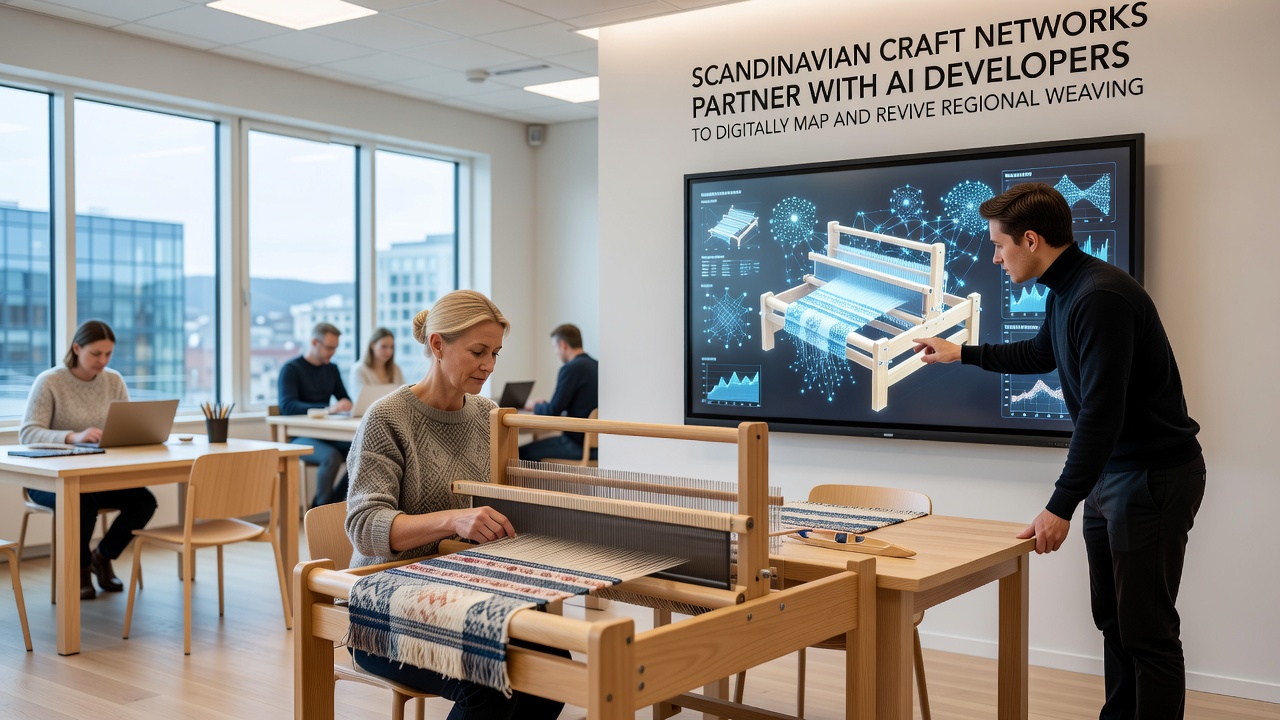
Developers have applied computer vision and pattern recognition software to scan thousands of woven artifacts held in museum collections, and this process has produced interactive databases that allow weavers to access detailed breakdowns of stitch structures and color combinations from specific regions. Researchers at institutions such as the University of Oslo have contributed datasets that include measurements from traditional looms, enabling AI models to simulate how certain threads interact under different tensions. Those who have studied these systems report that the resulting tools help younger practitioners replicate complex designs that previously required years of apprenticeship training, and the platforms also incorporate variations documented in remote communities.
Policy Changes Driving Collaboration
Adjustments to cultural funding frameworks in Scandinavia prompted many craft groups to seek technological partners, since new regulations emphasized measurable outcomes for heritage projects. Government agencies in multiple countries released updated criteria in October 2026 that prioritized digital accessibility, leading networks to integrate AI solutions for tracking usage and preservation metrics. Evidence from the Council of Europe cultural heritage reports indicates similar trends across Europe, where policy emphasis on innovation has supported hybrid approaches combining traditional skills with computational analysis. Craft collectives responded by forming consortia that pool resources for shared AI infrastructure, reducing individual costs while expanding the scope of mapped traditions.
One study from a Finnish research team revealed that AI-assisted mapping identified previously undocumented regional motifs in archived samples, and these discoveries have prompted renewed interest among local weavers who now incorporate the patterns into contemporary production. Workshops held throughout 2026 demonstrated how practitioners can upload their own work to the databases, which then suggest compatible historical references based on similarity algorithms. The approach has proven effective in areas where older knowledge holders are limited, since the systems preserve details that might otherwise fade from memory.
Community Involvement and Knowledge Transfer
Local weaving associations have participated actively in data collection phases, providing context that algorithms alone cannot interpret, while developers refine models based on feedback from these practitioners. Training sessions organized in October 2026 focused on teaching weavers to navigate the digital tools without requiring advanced technical expertise, and participants gained access to augmented reality overlays that project historical patterns onto modern looms. Figures from industry reports compiled by European design organizations highlight participation rates exceeding 1,200 artisans across the three main countries involved, with sessions continuing into subsequent months.
Additional partnerships have extended to academic programs at design schools, where students analyze the mapped data to create new textiles that respect traditional constraints yet meet current market demands. The collaborative model allows for iterative updates, as fresh contributions from the field refine the AI accuracy over time. Observers have noted steady growth in registered users of the platforms, which now include mobile applications for on-site documentation during festivals and markets.
Conclusion
These initiatives continue to expand as more regions contribute data and refine the underlying technologies, and the partnerships established between craft networks and AI specialists provide a framework that other heritage sectors may adapt. Ongoing policy developments support sustained investment, ensuring that the digital archives remain accessible while traditional weaving practices receive documented continuity. The combined efforts have produced measurable records of regional styles that serve both preservation and educational purposes across Scandinavia.