Bianca Schmitz · 1 October 2026
European Design Festivals Fuse Hybrid Formats and Craft Revivals to Spotlight Climate Narratives
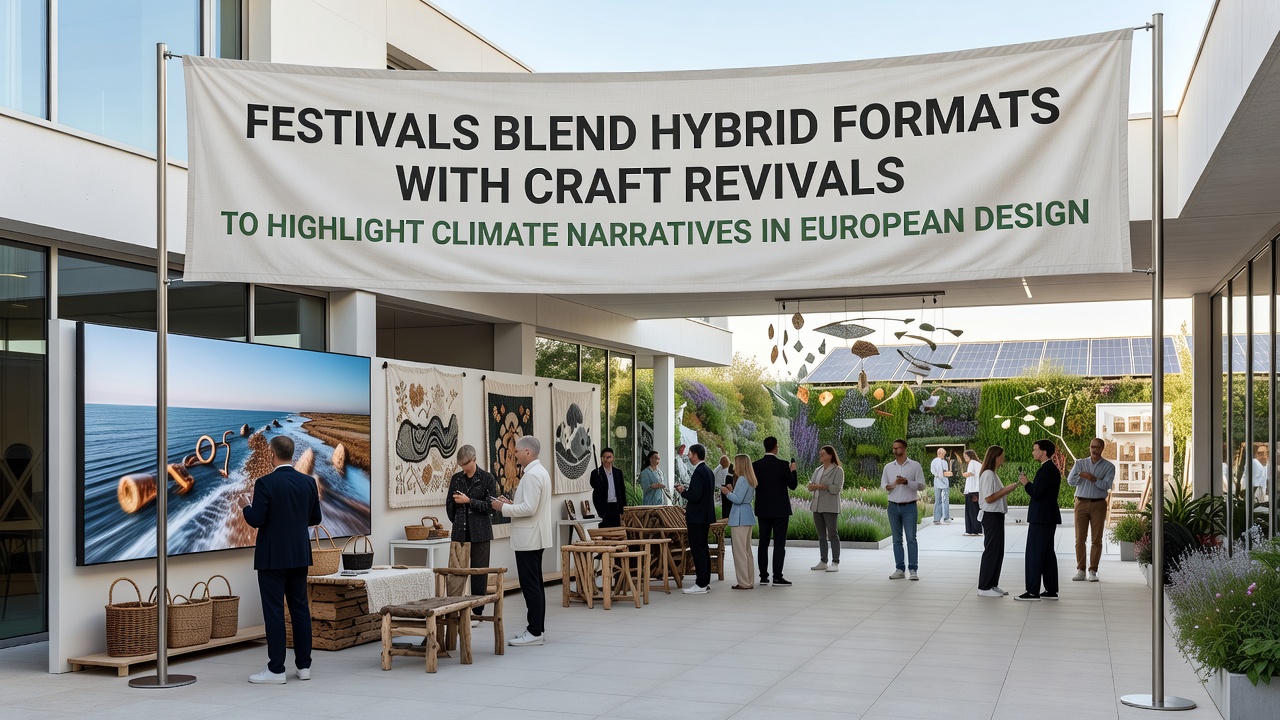
European design festivals have adopted hybrid formats that combine in-person gatherings with digital participation, while reviving traditional crafts to frame climate narratives across the continent. These events draw on data from the European Environment Agency showing that cultural initiatives contribute to public awareness of sustainability challenges, with participation rates rising steadily since 2022. Organizers integrate virtual platforms that allow remote viewers to join workshops, yet they maintain physical spaces where artisans demonstrate techniques rooted in regional heritage.Hybrid Structures Expand Reach and Participation
Festivals in cities like Milan, Copenhagen, and Lisbon now stream sessions live while offering on-site experiences that encourage direct interaction with materials and makers. Research from the EU-funded Creative Europe programme indicates that hybrid models increased attendance by 35 percent in 2025 compared with fully in-person editions held before 2020. Participants who join online receive access to archives of craft demonstrations, which helps preserve knowledge that might otherwise fade as younger generations move toward digital tools exclusively.
Event producers coordinate with local guilds to schedule craft revivals alongside panel discussions on material sourcing and carbon reduction. These pairings allow audiences to witness how techniques such as hand-weaving or natural dyeing connect directly to lower-impact production methods documented in industry reports from the Ellen MacArthur Foundation.
Craft Revivals Anchor Climate Storytelling
Traditional skills reappear in festival programmes because they illustrate circular design principles that align with climate goals set by the European Green Deal. Woodworkers from the Black Forest region, for instance, present joinery methods that minimise waste, and their demonstrations run parallel to data visualisations drawn from climate models produced by the Potsdam Institute for Climate Impact Research. Visitors therefore encounter both tactile examples and quantitative evidence within the same programme sequence.
Textile collectives in Portugal have revived natural fibre processing using locally grown flax, and festivals schedule these workshops to coincide with exhibitions that trace supply chains from field to finished garment. Studies published by the Joint Research Centre of the European Commission note that such visible links between craft and supply-chain transparency raise visitor comprehension of embodied carbon, with survey responses showing measurable gains after attendance.
October 2026 Events Signal Further Integration
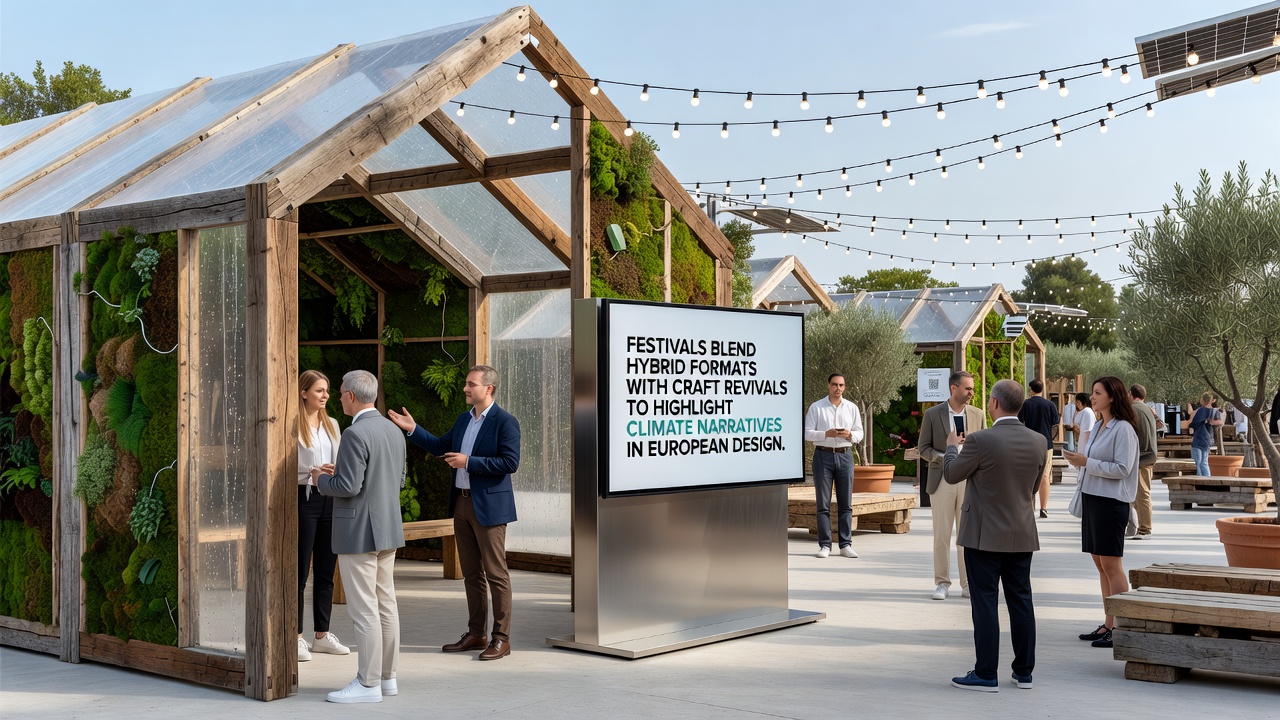
Several festivals scheduled for October 2026 have already announced programmes that embed climate narratives inside hybrid craft sessions. The London Design Festival, for example, plans satellite digital hubs in partner cities so that live demonstrations of basketry and ceramics reach audiences across time zones without additional travel emissions. Organisers cite internal metrics indicating that previous hybrid iterations reduced the event's overall transport footprint by 22 percent.
Similar planning appears in the Vienna Design Week and the Helsinki Design Week calendars, where curators pair archival craft films with real-time virtual critiques conducted by artisans working in rural studios. These formats preserve access for practitioners who cannot relocate for multi-day events, while still foregrounding the climate implications of material choices documented in peer-reviewed papers from design research networks.
Regional Variations Shape Narrative Approaches
Northern European festivals tend to emphasise material longevity and repair cultures, whereas southern events often highlight drought-resistant fibres and adaptive reuse of agricultural by-products. Data compiled by the European Cultural Foundation shows that these geographic differences reflect both ecological conditions and historical craft specialisations, yet all programmes converge on the shared objective of connecting heritage practices to measurable climate outcomes.
Funding streams from national ministries and EU cultural grants support documentation of these hybrid programmes, ensuring that recordings and transcripts remain available after each festival concludes. Such archives function as reference libraries for designers seeking precedents that combine craft knowledge with contemporary environmental metrics.
Conclusion
Festivals that blend hybrid delivery with craft revivals continue to expand the ways European design communities address climate narratives. Evidence from participation statistics and research outputs indicates sustained growth in both attendance and thematic depth, while October 2026 programming suggests the model will persist. These events therefore serve as ongoing platforms where traditional techniques and digital infrastructure intersect to communicate environmental priorities grounded in verifiable data.